I've long subscribed to a philosophy that says, "keeping some pressure on is better than giving full tempo back". But in the past few months, I've come to question that assumption. Watching the pros play on stream - and even debriefing the outcomes of my own games - I've started to notice that there are good reasons to drop your last card in arsenal without making any attacks. And that got me thinking about hand size.
Ideal Play Patterns
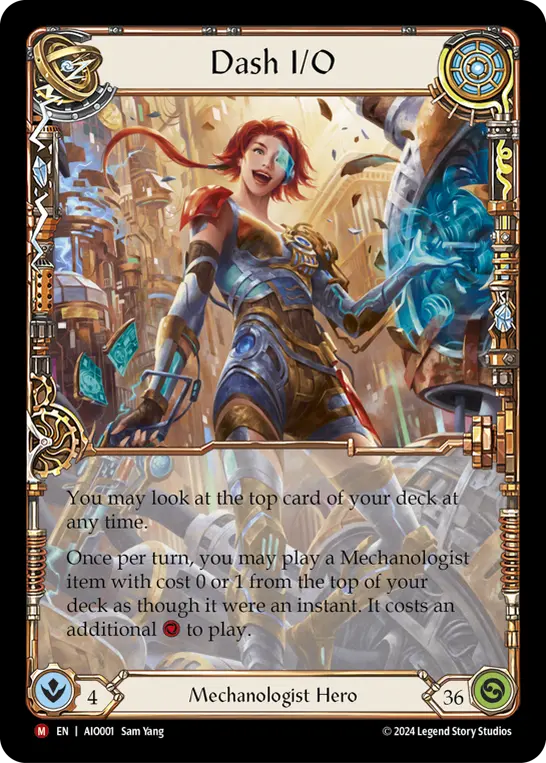
Every hero has a plan for how to use the four cards they begin each turn cycle with. An aggressive deck like Dash I/O or Cindra would prefer to hold a full grip of cards, with the total value of their turns rising in multiplicative fashion the wider they can go. Kassai and Rhinar are built to split their hand between blocking and attacking, getting good offensive value out of 2-3 cards. Gravy Bones can play off a 1-card hand if he's got allies on board, and Jarl is honestly fine with committing all 4 to defenses.
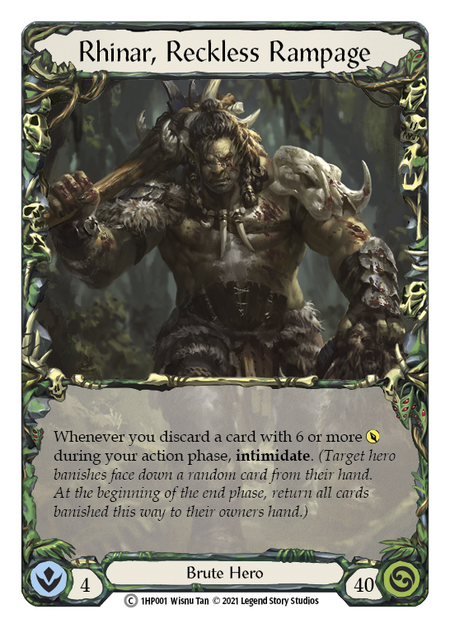
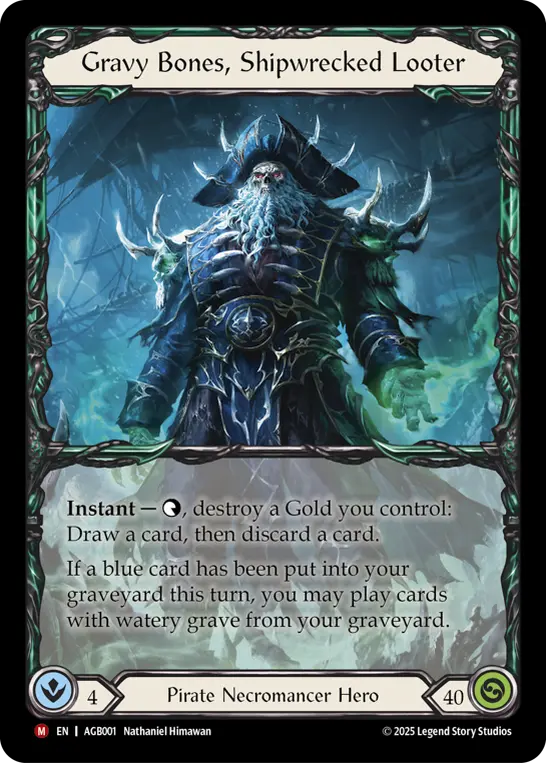
Knowing what your deck is trying to do, you can extract maximum value from all of your cards and exert pressure on your opponent. But what are you supposed to do when their gameplay demands that you stray from your own preferences?
Let's say you're Marlynn. You've got a deck built with 35 blues, and you've just drawn into a hand with 3 of those and a red Harpoon. Marlynn is designed to maximize 3-card plays, pitching 2 blues to both activate her cannon and fire a Harpoon - but she does need to load it first, which she can do by drawing a card. You've got a fat stack of Gold in play, so that shouldn't be a problem; you'd happily throw that extraneous blue at blocking something.
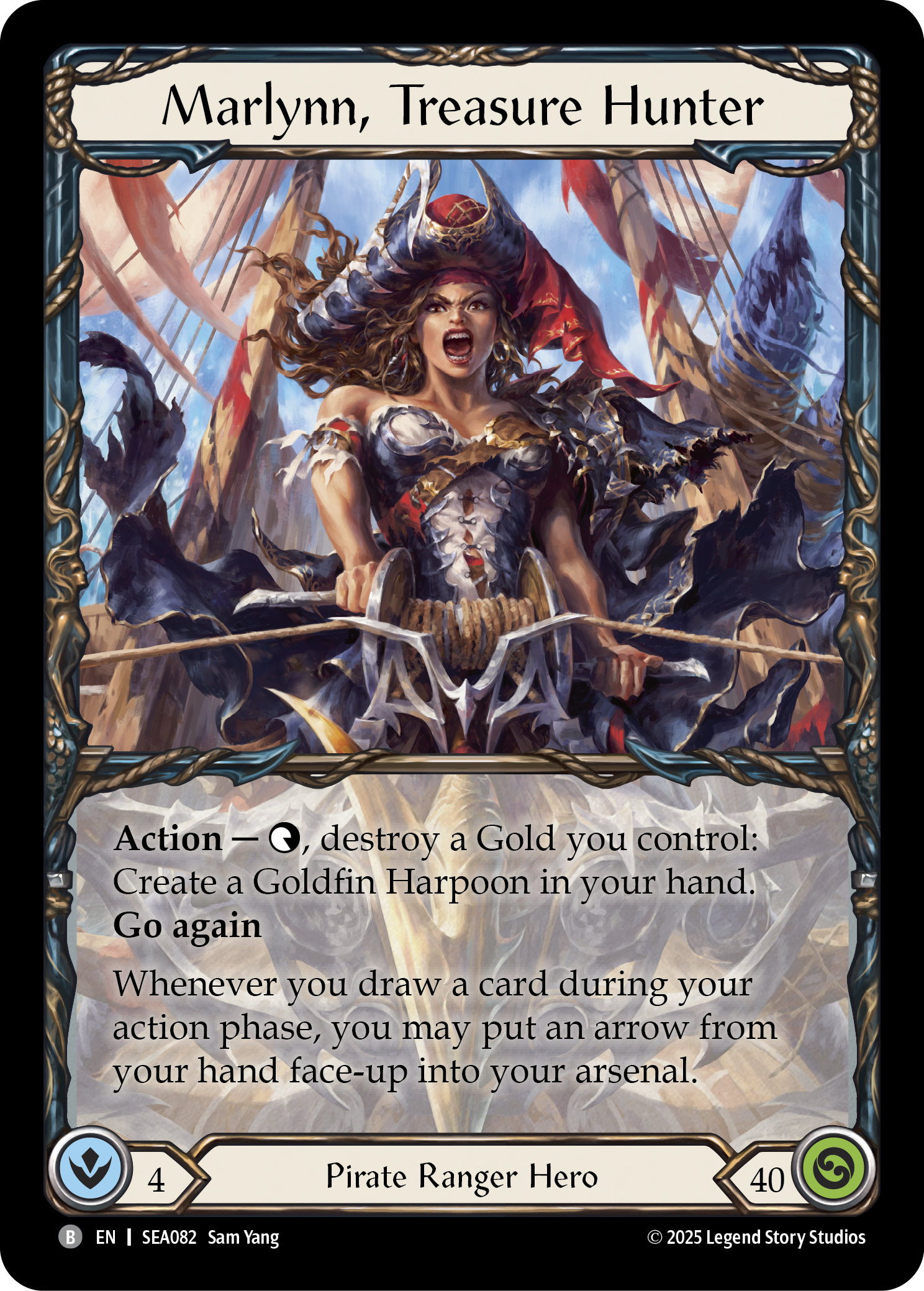
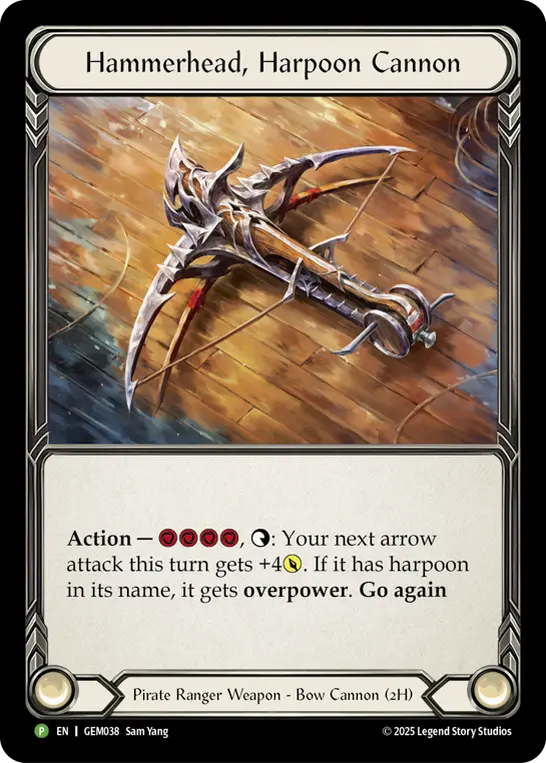
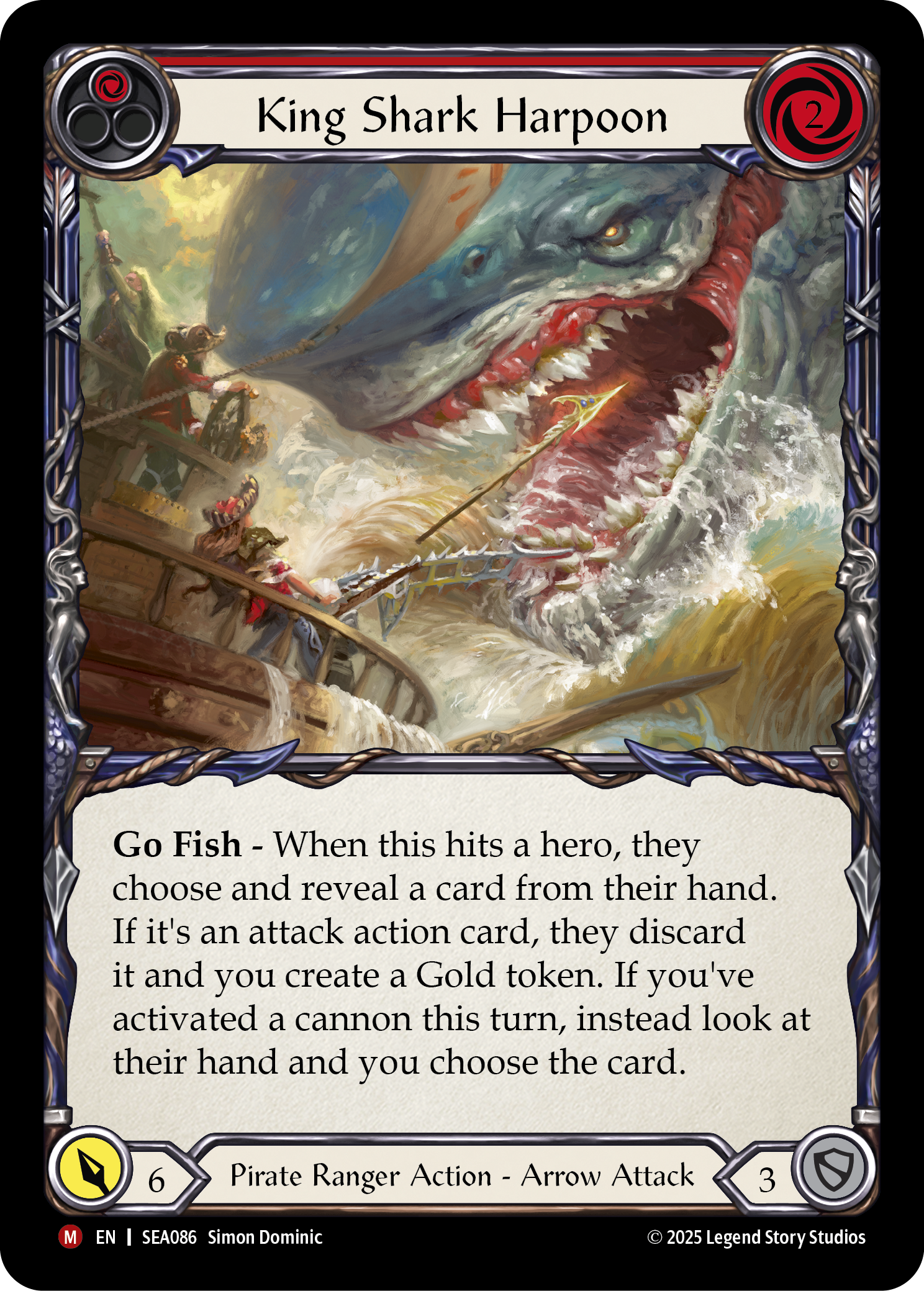
Let's say your opponent presented some dangerous on-hits (a Spinal Crush, perhaps?), and you were forced to block with 2 of your cards.
You hold onto a blue and the Harpoon; on your turn, you could still crack a Gold to load the Harpoon and fire it for 6. This 2-card 6 would be below rate, but it would at least present damage - it's still exerting some pressure.
But is that 6 damage going to meaningfully deter a follow-up turn cycle that looks exactly the same? If this same back-and-forth continues for the rest of the game, will you come out ahead?
Marlynn only truly performs with 3+ cards in hand. When you find yourself forced into a 2-card block, you're better off dropping that Harpoon into arsenal and resetting for the next cycle. (In fact, you should probably just go ahead and block with 3 cards.)
When you can't get to your own attack phase with the card count your deck needs to play at its best, do what you can to set your next turn up with the cards you need to steal tempo back.
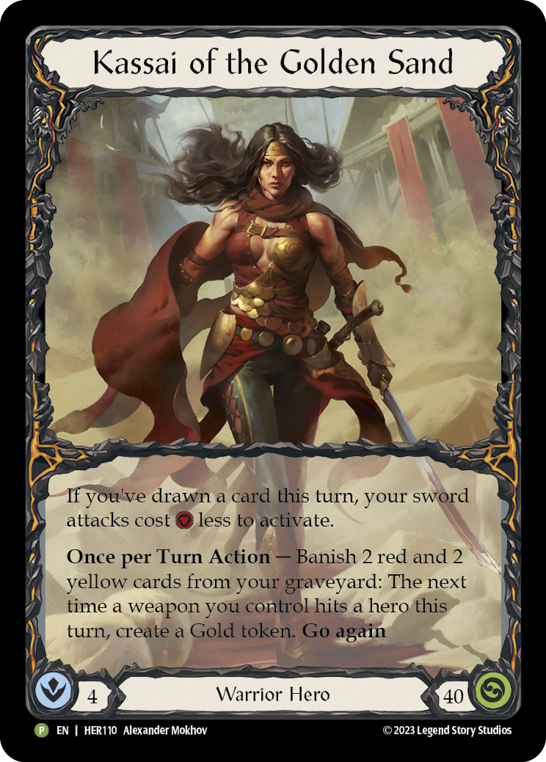

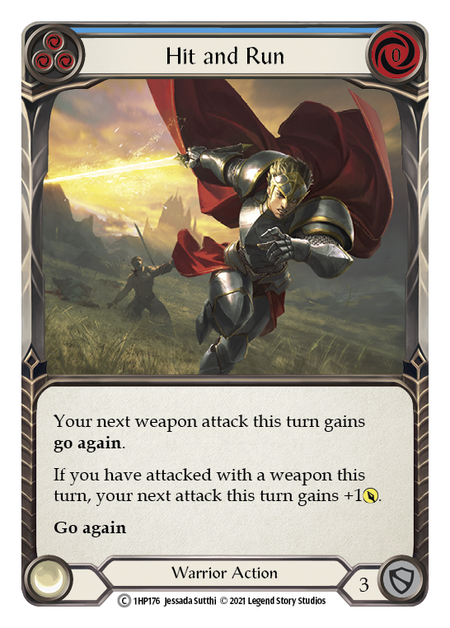
Sometimes, forcing a flood is just as bad. When playing as Kassai, a certain number of cards in your deck have to provide go again. Most decks dedicate the majority of their blue cards to this role, so that they can serve a dual purpose as pitch cards when they're not needed for your line of play. Just as often, extraneous sources of go again are repurposed as blocking cards. Once you've drawn Unsheathed, you aren't going to play out Hit and Run (blue).
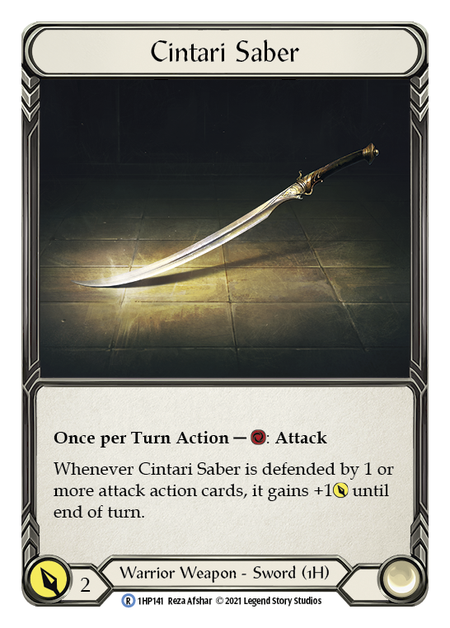
With just those two cards, Kassai has a pretty good turn lined up: Unsheathed > Cintari Saber > Cintari Saber, and if either of them hits, you've got a floating resource to spend on Grains of Bloodspill, floating a Vigor token into your next turn.
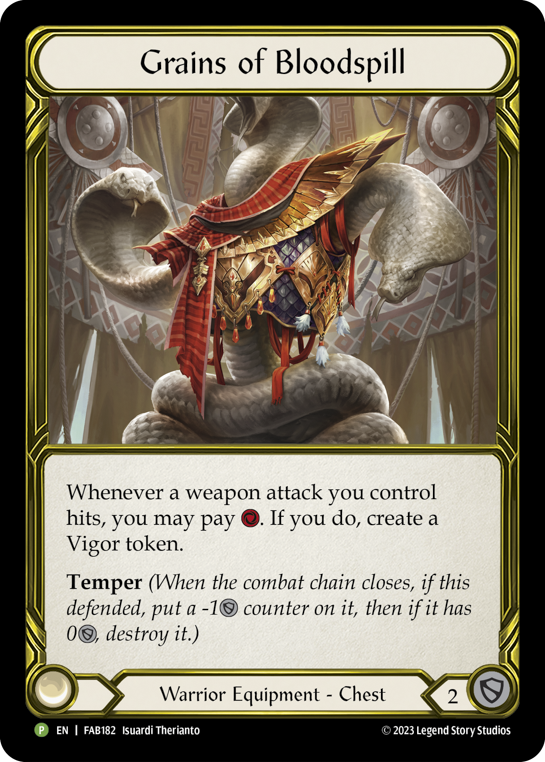
You've got two more cards in hand, but they're also sources of go again, cards that you're typically happy to see but, with the go again superfluous, these aren't earning even the 3 value a card's supposed to represent. In other words, you want to block.
If you've been putting your opponent on the ropes this game, forcing them to block with 2-3 cards each turn, you're hoping that they make that 1-card play, "just to keep some pressure on". You don't need 3 more resources; and the +1 from playing out a Hit and Run is well below the value it'd get as a blocking card. That 'minimal pressure' is giving you more value!
Feast or Famine?
The plight of Kassai as illustrated above demands an answer to the question: can you ever have too many cards in hand?
The answer, of course, is the perennial classic of internet discourse: it depends.
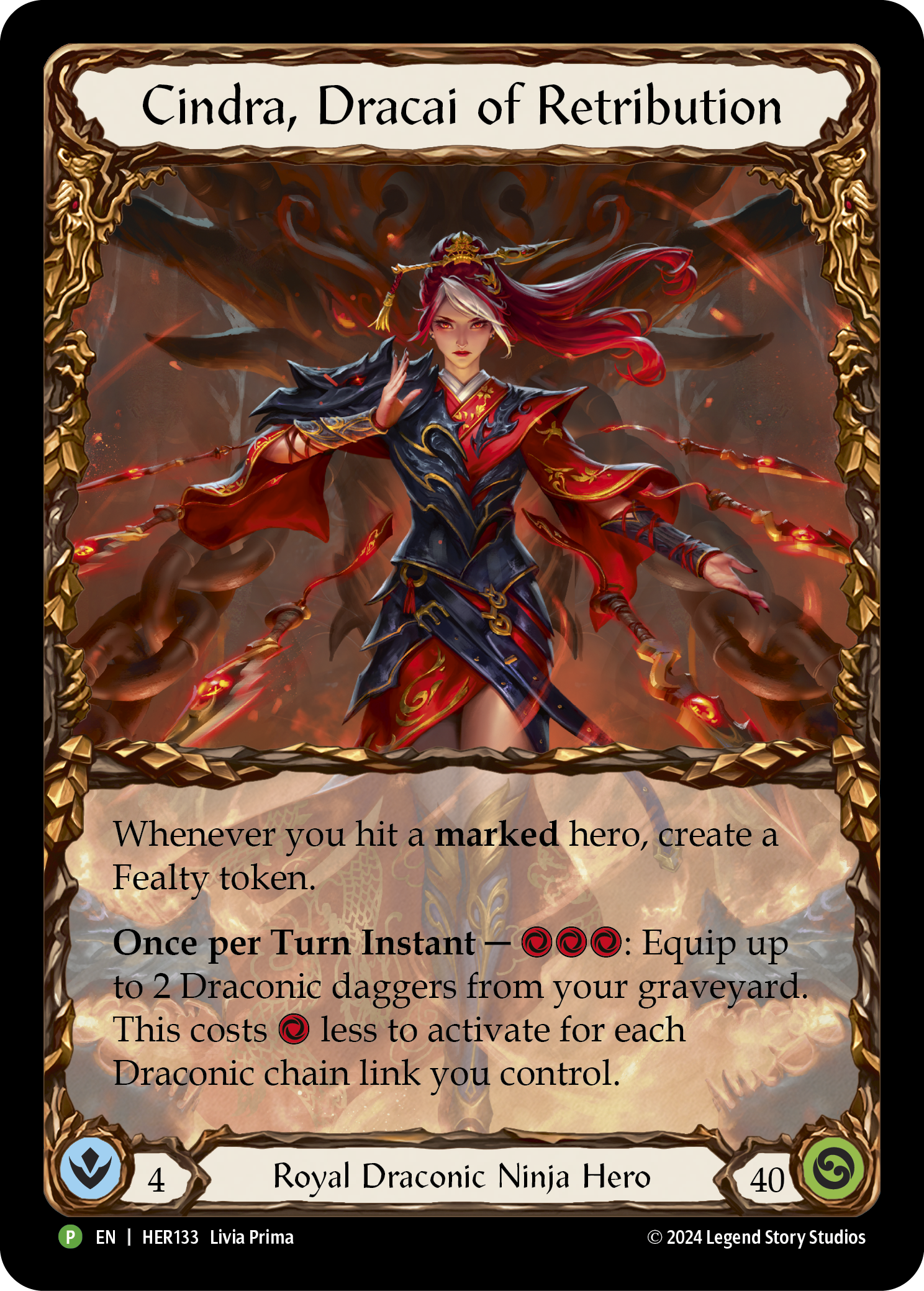
For a hero like Cindra, it's hard to imagine a combination of 5 cards that can't be converted into a devastating and game-shaping power play. Cindra is built to apply aggressive pressure, and over time she hopes to creep toward demanding every card in the opponent's hand laid down on the blocking side of the combat chain. Cindra is exactly the kind of hero who shouldn't settle for a 1-card turn; when forced to block with 3, that last card should go to the arsenal every time, with the intention of stretching the next turn wide enough to steal back tempo.
Arakni, however? The Huntsman can get flooded.
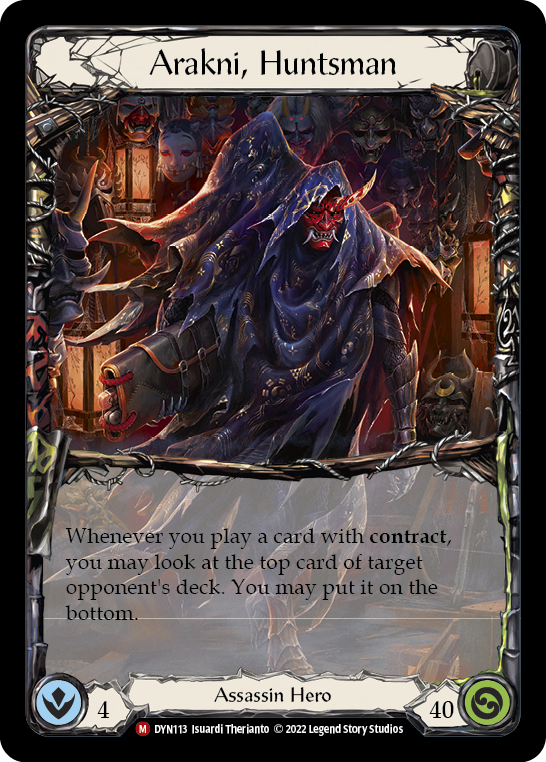
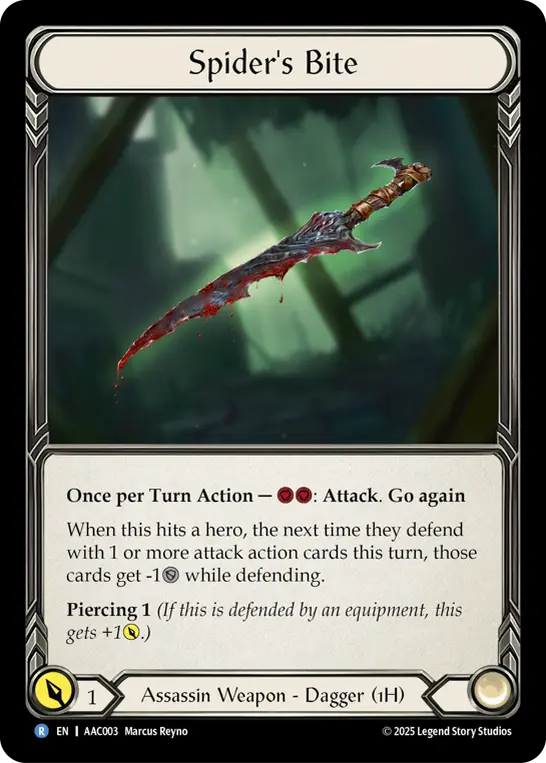
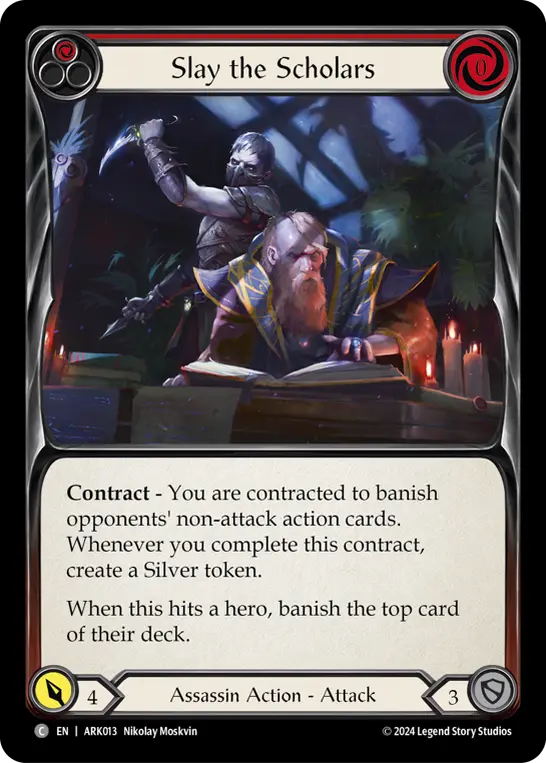
Arakni, Huntsman is a deck that often wins by running the enemy out of cards; but unlike the Guardians, who also deal in fatigue, Arakni can struggle to convert a 4-card hand when they're not presented with something to block. A hefty suite of defense reactions is only the most obvious obstacle - pitching at red, they can't even be converted into dagger swings, much less cycled with extraneous Silver. A similar situation can arise when you've drawn a hand that lacks a contract attack, a prerequisite for many of your attack reactions. Even a hand stuffed with attacks can be hard to convert, as Assassins tend to lack go again options.
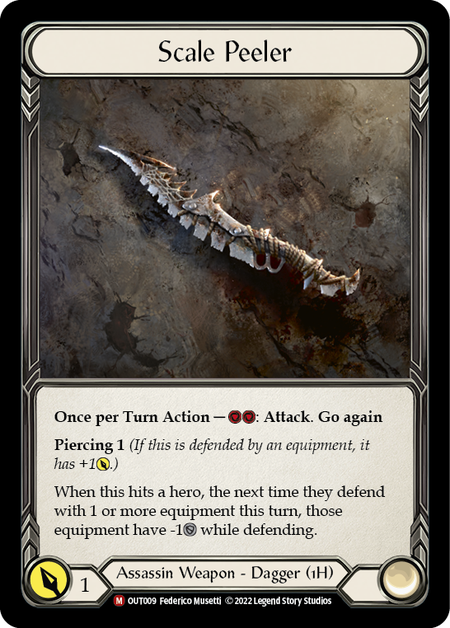
To work your way out of these situations, the arsenal is often the key - but in a strangely opposite fashion. While Marlynn may be overcoming the problem of having to block too much, Arakni often drops a card in arsenal to store away value that, hopefully, lets him extract more from opportunities to block in the next cycle. Dagger > Dagger > contract attack spends 3 cards while presenting awkward breakpoints; and while a 3-card 6 is pretty terrible, you were only put in this situation because your opponent presented no damage last turn, so you're probably still up on that turn cycle.
Learning the Lesson
These situations can feel incredibly counter-intuitive, even if you grasp the examples. In both feast and famine, the arsenal zone lets you carry over a card from your hand, and in doing so converts one turn's problem into the next turn's providence - despite having opposite desires for the next turn's outcome!
I think that's why it took me so long to learn this lesson - and even to notice when it was happening right in front of me. "Arsenal, pass" always sounds like a failure, a turn lost to an unfortunate outcome. You watch momentum being lost in that turn cycle, without thinking about how that card might play an outsized role in stealing back momentum the next time. The value is banked - and if that card can help you reach your ideal hand size in another turn, it may let you tap into the power level and potential your deck was designed to reach.
More that simply a way to reach a 5-card hand or store away a combo piece, the arsenal can help to right the ship and regain tempo - sometimes by giving you more cards to work with, and sometimes by withholding opportunities for your opponent to curate their hand. An attack not thrown is a block not optioned; when a blocking opportunity isn't presented, those are choices not offered; and when choices aren't offered, the signature tri-purpose of a Flesh and Blood card doesn't exist.
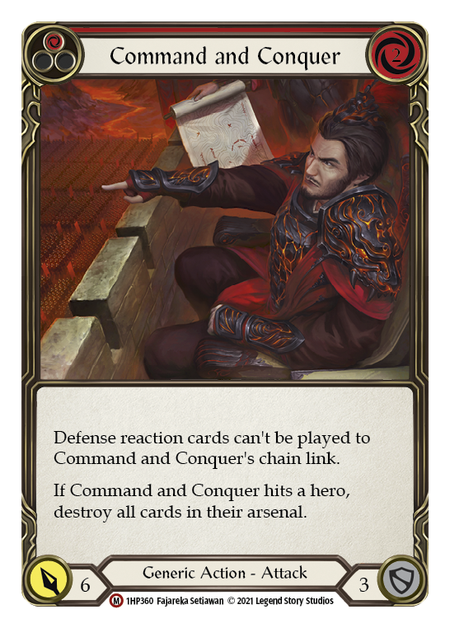
This is also why Command and Conquer has remained such an evergreen staple of competitive play. When your opponent can't convert their hand into a powerful turn, the arsenal offers a way to gain advantage from that card on a 4th axis. Command and Conquer strips that away - and in the process, often leaves them without recourse as you continue to control the tempo. (That said, if Command and Conquer doesn't fit the play patterns of your deck, you may in fact be throwing away your own tempo, value, and efficiency to play it out - and in the process, giving them more than you took away!)
The next level of this strategic understanding is reading your opponent's usage of the arsenal zone, and what hand size they'd prefer to be working with. As a general rule, the further apart your deck's desires are, the less advantage is available there; put another way, an aggro deck can't really pressure the ideal hand size of a fatigue deck, and vice versa. But when your desires are closely aligned - say, Cindra into Marlynn - there's power to be found in forcing them to react to you. A 3-card turn from Marlynn is a lot more intimidating that a 3-card turn from Cindra; and an "arsenal, pass" from Huntsman probably means their plan is moving forward.